Kitchen Table Confessions: Why America Does Its Toughest Photo Editing After Midnight
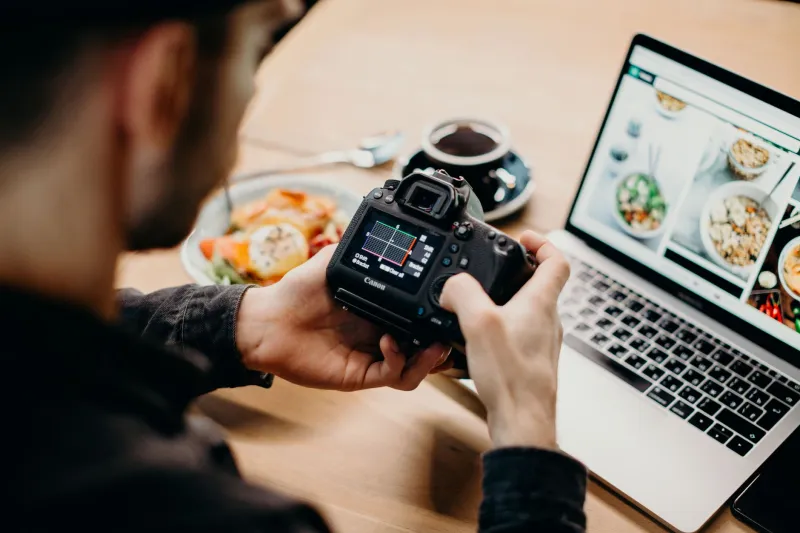
There's a specific kind of silence that settles over a house around 3 a.m. The refrigerator hums. A car passes occasionally. And in a disorienting number of American homes, someone is sitting at a kitchen table or a dim home office, staring at a screen full of photographs, deciding which ones get to live.
Call them the nighttime cullers. Wedding photographers with 4,000 raw frames from a Saturday, retirees facing forty years of shoebox scans, new parents drowning in near-identical shots of a toddler. What they share isn't a skill set — it's a schedule. The editing happens when nobody's watching.
The Hour When Nobody's Watching
"I can't delete in daylight," says Marisol Vega, a wedding photographer in Albuquerque who estimates she's culled more than 300 weddings over twelve years. "During the day it feels like work. At night it feels like something closer to confession."
Vega isn't alone, and she isn't being dramatic — or not only. Talk to enough night editors and a pattern emerges: the dark hours strip away the performative layer. A client will never see your 3 a.m. decisions. Your future self, the one who might second-guess a ruthless delete, is asleep. All that's left is you and the image and the question underneath every cull: does this deserve to exist?
Dr. Ellen Parkhurst, a curator at a Midwest photography archive who has studied how private collections get edited down for preservation, sees the midnight habit as a kind of privacy ritual. "Editing is the most intimate act in photography," she says. "Taking the picture is about the world. Cutting it down is about you. People instinctively protect that."
The Delete Key as a Moral Instrument
Here's where it gets strange: almost nobody describes culling as technical. They describe it in the language of ethics.
Vega talks about "owing" the couple a good edit. Retirees sorting family archives describe guilt — deleting a blurry photo of a relative who died decades ago feels like a small betrayal, even when nobody alive would recognize the face. One man she interviewed, a retired postal worker in Ohio digitizing his late mother's slides, told her he kept a folder he called "Maybe" because he couldn't bring himself to make the final cut on roughly 200 images.
That Maybe folder might be the most honest artifact in American photography. It's the visible shape of our hesitation — proof that deletion was never really about storage space.
"People think they're organizing images," Parkhurst says. "They're actually organizing memory. And memory doesn't sort neatly. So the folder called Maybe becomes a kind of purgatory, and people leave things there for years."
Rituals of the Cull
The habits are remarkably consistent, even among strangers.
The first pass is heartless. Nearly every night editor describes a fast, almost violent first sweep — closed eyes, accidental bursts, the thumb over the lens. Delete, delete, delete. It's not editing yet; it's triage. Getting the easy kills out of the way early, several admit, makes the later decisions feel more legitimate.
Music matters. Almost universally. Wedding photographers lean toward something wordless — film scores, ambient playlists. Archive sorters skew toward old radio, music from the era of the photos themselves. One retiree in Georgia culls her grandchildren's soccer photos to doo-wop because, she says, "it keeps me from overthinking a JPEG."
The kitchen table beats the desk. There's something about the domestic surface — the place where mail gets sorted and homework gets done — that makes the emotional weight of deletion feel manageable. The home office, with its professional associations, makes the work feel heavier than it needs to.
And the hour matters most of all. After midnight, the internal audience goes quiet. The imagined clients, the imagined descendants, the imagined future self who might say why did you delete that? — they're all asleep. The cull at 3 a.m. is the closest thing to editing for an audience of zero.
What the Survivors Say About Us
Parkhurst has spent years looking at what actually survives a cull, and her findings are quietly subversive. We don't keep the technically best images. We keep the ones where someone is looking at someone else. The blur where a grandmother is mid-laugh outranks the sharp, well-lit portrait every time.
"Deletion patterns are aspiration patterns," she argues. "When you cut an image, you're saying this isn't the story I want to tell about us. What's left in the folder after midnight is essentially a self-portrait — not of how you looked, but of how you wanted it to have been."
That reframes the whole ritual. The wedding photographer deleting 3,800 frames isn't discarding failures; she's writing an argument about what the day meant. The retiree keeping 200 images in a Maybe folder isn't indecisive — he's refusing to let his mother's life be reduced to a highlight reel.
By the Light of the Monitor
Vega finishes her edits around 4:30 most mornings. She delivers galleries that clients describe as magical, cohesive, her. They never see the kitchen table, the cold coffee, the hundred small funerals of images that didn't make it.
And maybe that's the point. Every gallery, every family archive, every carefully curated Instagram grid is the visible tip of an invisible, nocturnal labor of love and ruthlessness. The delete key doesn't get any credit. But the next time an album stops you in your scroll — every frame earning its place — consider that somewhere in America, someone lost sleep making sure it would.
The best images, it turns out, aren't just taken. They're survived.