Hold the Shot: The Directors Who Figured Out That Nothing Happening Is Everything
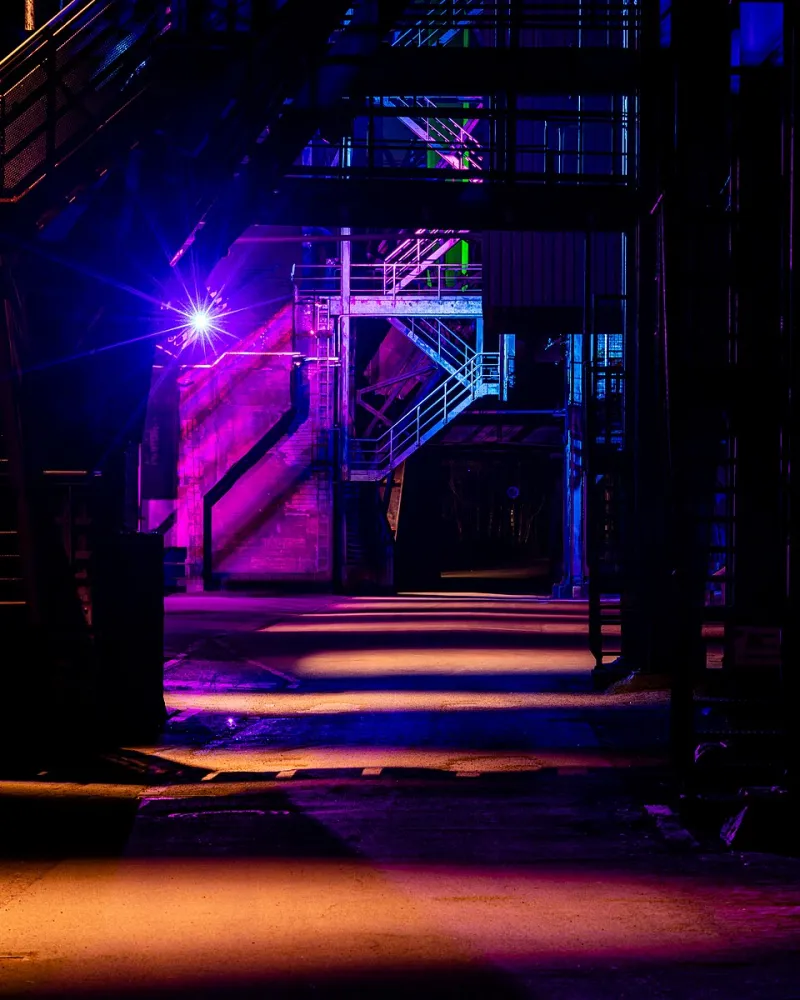
Photo: Dietmar Rabich, CC BY-SA 4.0, via Wikimedia Commons
Here's a challenge. The next time you're watching something — a movie, a short film, anything — count how long the camera holds on a single shot before cutting. Really count.
In most of what streams through your feed on any given Tuesday, you'll rarely make it past four seconds. Often less. The edit comes fast, the angle shifts, the information keeps moving, because somewhere in a data center, an algorithm has determined that your attention is a resource to be harvested before it wanders.
Now imagine a director who looks at all of that and deliberately goes the other direction.
The Art of the Long Hold
Slow cinema isn't new — it has deep roots in the work of directors like Andrei Tarkovsky, Chantal Akerman, and Béla Tarr, filmmakers who treated duration itself as a storytelling tool. But what's genuinely new is the context in which this approach is being rediscovered, and the audiences who are finding their way to it.
In 2024 and into 2025, a growing number of American independent filmmakers, video essayists, and even commercial directors have been deliberately pulling back on pace. Longer takes. Extended silences. Scenes that sit in a location long after the dialogue has ended, letting the space breathe and the viewer's mind wander — or focus, depending on how you come to it.
The counterintuitive result? People are paying more attention, not less.
"There's this assumption that you have to earn every second," says Portland-based filmmaker Della Marsh, whose debut feature runs at a pace that would give most studio executives hives. "But I think what actually earns attention is trusting the audience. When you hold a shot, you're telling people: look closer. There's more here. And they respond to that."
Negative Space as Psychological Pressure
Visually, what slow cinema understands that faster content often doesn't is the power of negative space — not just in the frame, but in time. A held shot creates a kind of visual pressure. Your eye, trained by decades of fast editing to expect the cut, starts to anticipate it, and when it doesn't come, something interesting happens.
You start to look.
Really look. At the corner of the frame you were ignoring. At the way light falls across a wall. At the micro-expressions on an actor's face that would be invisible in a half-second cut. At the background, which turns out to be doing a lot of work.
This is the paradox at the heart of slow cinema: the less that appears to be happening on screen, the more the viewer's brain activates to fill the space. The tension isn't in the action — it's in the waiting. And waiting, it turns out, is one of the most powerful emotional states a filmmaker can put an audience in.
Think about the way a held shot in a horror film can be more terrifying than the scare itself. Or the way a long take of two people sitting in silence after a fight communicates something about the weight of that silence that no amount of dialogue could replicate. The camera isn't showing you what to feel. It's giving you room to feel it.
The Algorithmic Backlash
It would be too easy to frame the slow cinema movement as purely aesthetic — a stylistic preference for a certain kind of filmmaking. But there's something more pointed happening here, and the directors doing this work are often pretty direct about it.
They're pushing back against the scroll.
The content pipeline that dominates most people's screen time is engineered, down to the millisecond, to prevent the kind of sustained attention that slow cinema requires. Platforms reward hooks in the first second, rapid visual changes, and emotional stimulation delivered at a pace that never allows the viewer to settle. The result is a viewing experience that is, in a very real sense, the opposite of cinematic.
For audiences who spend most of their day in that environment — and in the US in 2025, that's most of us — encountering a film or video that simply refuses to participate in that logic can feel genuinely disorienting at first. And then, often, deeply relieving.
"I've had people tell me they felt anxious for the first ten minutes of my film," says New York-based director and cinematographer Jace Okonkwo, whose recent short Meridian features a 12-minute unbroken take of a woman cleaning out an apartment. "And then they settled. And then they said it was the most focused they'd felt watching anything in years. That anxiety was just withdrawal."
Withdrawal is the right word. When you remove the constant stimulus, there's an adjustment period. But on the other side of it is something that faster content genuinely can't deliver: the feeling of being fully present inside a visual experience.
What Stillness Reveals
There's a photographic principle at play in all of this that Volante Eyes readers will recognize immediately. In still photography, composition is everything — because you only get one frame. The photographer has to make every element of that frame carry weight, has to think about what the eye will travel toward and what it will rest on.
Slow cinema applies that same discipline to moving images. When you commit to a long take, every element of the frame has to justify its presence. The set design, the light, the position of every body in the space — all of it is visible for long enough that it actually registers. You can't hide behind the cut.
This is why so many slow cinema films are visually stunning in a way that's almost painful. Directors like Kelly Reichardt, whose unhurried pacing has made her one of the most distinctive American filmmakers working today, compose frames that reward the kind of sustained looking that her pacing demands. The stillness isn't empty. It's dense.
Relearning How to Watch
The broader conversation around slow cinema touches on something that feels genuinely important right now: the question of what kind of viewers we're becoming.
If attention is a muscle — and there's pretty compelling evidence that it is — then the algorithmic content environment is one that trains it for sprinting and never lets it rest long enough to build endurance. Slow cinema asks for something different. It asks you to sit with uncertainty, to tolerate not knowing what's about to happen, to find meaning in a face or a room or a patch of afternoon light rather than in the next plot development.
That's harder than it sounds. And it's also, for a lot of people discovering it right now, one of the more rewarding things they've done in front of a screen in a while.
Some shots are worth holding. The directors who know that are betting the whole film on it — and increasingly, audiences are showing up to prove them right.