The Graveyard of Good Ideas: What Photographers' Deleted Shots Know About Them
There's a drawer in Joel Meyerowitz's legacy — metaphorically speaking — that most people will never open. For every street photograph that made him famous, there are hundreds of frames that didn't survive his own edit. And Meyerowitz isn't alone. Walk through the career of almost any photographer whose work you admire, and you're walking past a graveyard of images that died quietly, one keystroke at a time.
We've become obsessed with what photographers show us. Almost nobody asks what they refuse to.
The Contact Sheet Was the Original Confession
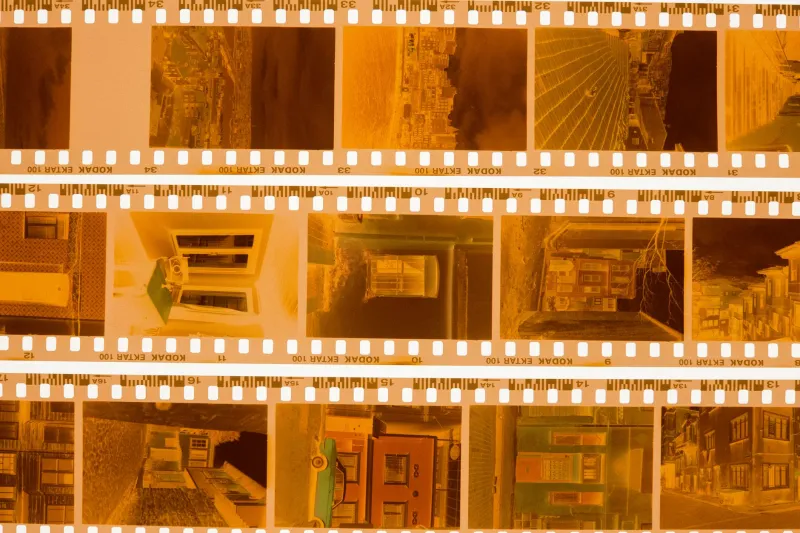
Before digital, the evidence was physical. Contact sheets — those grids of tiny frames printed straight from the negative — laid a photographer's entire thought process bare. You could see the hesitation, the near-misses, the frame shot three seconds before the famous one. Magnum's archives are essentially libraries of failure, and curators treat them like scripture.
Robert Frank's contact sheets for The Americans are now exhibited in their own right. The outtakes of Garry Winogrand — thousands of rolls undeveloped at his death — became a biography told in negative space. What was discarded turned out to say as much about the artist as what was kept.
The digital era threatened to end all that. No more sheets, no more accidental archaeology. Just a delete key and a trash folder that empties itself.
What the Trash Folder Knows
Ask working photographers about their rejects and the answers get surprisingly personal.
"My rejects are more honest than my portfolio," says Dana Whitfield, a documentary photographer based in Asheville, North Carolina. "The portfolio is a performance. The delete pile is a diary. I can tell what kind of week I was having just by looking at what I couldn't tolerate."
Whitfield keeps everything, which puts her in a shrinking minority. Storage is cheap, but attention isn't, and most shooters now cull ruthlessly in the field or the same night. The instinct is economic — nobody wants to wade through 4,000 frames from a wedding — but the side effect is cultural. We may be producing more images than any generation in history, yet leaving behind less trace of how they were made.
Marcus Ibekwe, a portrait photographer in Chicago, puts it bluntly: "Clients think the skill is taking the picture. The skill is knowing which picture doesn't exist afterward."
Curation Is the New Darkroom
Here's the uncomfortable math: when film cost money per frame, photographers averaged maybe 36 chances per roll. A wedding might consume 20 rolls. Every exposure was a small financial decision, which forced a kind of pre-visualization that's nearly extinct.
Today a single afternoon can produce 2,000 frames. The bottleneck has moved entirely downstream. The camera will give you a technically competent image of almost anything. The question is no longer can you capture it — it's whether you can recognize the one frame among thousands that deserves to outlive the session.
That's why the best editors in the business are quietly becoming the most valuable people in photography. Photo editors at places like The New York Times Magazine or National Geographic perform a function that has nothing to do with taking pictures and everything to do with refusing them. Their power lies in the no.
The Outtake as Art Form
Some artists have flipped the script entirely, making the discard pile the product. Exhibitions of outtakes and alternates have become their own genre — shows built around the almost, the rejected, the second-best. Audiences love them, partly because failure is relatable and partly because seeing the misses makes the masterpieces feel earned rather than magical.
There's a lesson there for anyone creating anything in 2025: the work you hide defines the work you show. A portfolio with no visible casualties looks effortless, and effortlessness reads as shallow. The photographers we trust most are the ones whose contact sheets — literal or figurative — show the wrestling match.
Keep Your Corpses
So here's the argument, plainly: stop deleting like your rejects are embarrassing. They're evidence. They're the record of your taste developing in real time, the fingerprints of every wrong turn that taught you what right looks like.
Print the contact sheet. Keep the trash folder backed up. In twenty years, the images you couldn't stand to look at might be the ones that explain exactly who you were when you made the work you're proud of.
Every frame tells a story. The ones you throw away tell yours.