Burn Bright: The Photographers Ditching Soft Light for Something That Actually Stings
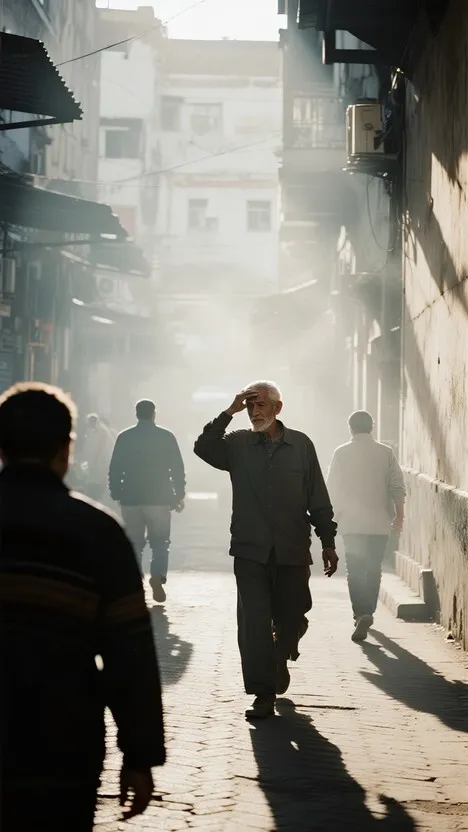
Photo: harsh midday sunlight portrait street photography strong shadows contrast, via images.stockcake.com
Ask almost any photography instructor what the worst time of day to shoot is, and you'll get the same answer delivered with the same slight grimace: noon. High sun. Overhead light that flattens some things and destroys others, carves shadows under eyes like bruises, blows out highlights with zero mercy, and generally makes everything look either washed out or aggressively angular.
For most of photography's polished, Instagram-era history, that answer made complete sense. Soft light is flattering. Golden hour is magic. Blue hour is a gift. Midday is a problem to be managed.
Except — a lot of photographers have stopped managing it. They've started chasing it.
The Light Nobody Wanted
There's a particular quality to harsh midday light that's almost confrontational. It doesn't collaborate. It doesn't flatter. It hits a face and immediately starts interrogating it — every line, every pore, every expression doing something unguarded. Shadows fall straight down and go dark fast. Skin reads differently. Colors either oversaturate or bleach out. The whole image has an edge to it that soft, diffused light simply cannot replicate.
For years, that edge was considered a flaw. The goal was to eliminate it — shoot early, shoot late, use a reflector, wait for a cloud, move your subject to open shade. The entire infrastructure of professional portrait and fashion photography was built around the avoidance of direct overhead sun.
But there's a generation of photographers — working in fashion, street, documentary, and editorial spaces — who looked at that confrontational quality and saw something different. They saw honesty. They saw a kind of visual intensity that soft light, for all its beauty, can't actually deliver. And they started building entire bodies of work around the light that everyone else was running from.
Fashion's Harsh New Vocabulary
Fashion photography is probably where this shift is most visible, partly because the departure from convention is so stark. The genre has a long, complicated relationship with idealization — perfect light, perfect skin, perfect everything. The whole visual language of high fashion was built on making things look more beautiful than reality.
But flip through any of the major editorial shoots from the last few years and you'll start noticing something different. Harsh overhead light that makes cheekbones look like architecture. Fluorescent office lighting that gives skin a slightly alien quality. Shadows that cut across faces at angles that a lighting director from twenty years ago would have had a full breakdown over.
This isn't accidental. Photographers like Tyler Mitchell, Renell Medrano, and a wave of younger shooters working in and around the New York and LA fashion scenes have been deliberately incorporating difficult light as a form of aesthetic argument — a way of saying that beauty doesn't require the removal of all friction. That something can be compelling because it's uncomfortable to look at, not in spite of it.
The result is fashion photography that feels less like advertising and more like portraiture. Less like aspiration and more like recognition.
Street Photography's Long Relationship with the Sun
It's worth noting that street photographers never really got the memo about avoiding harsh light in the first place. The tradition of American street photography — from Garry Winogrand burning through Manhattan at noon to Vivian Maier's Chicago sidewalks — has always had a different relationship with difficult light than the studio world does.
On the street, you shoot when you're there. You don't wait for golden hour because the moment you want is happening right now, in the full blast of a July afternoon in Chicago or a concrete-reflected glare in downtown Houston. The harshness isn't a problem to solve — it's part of the environment you're documenting.
What's new is that this street photography sensibility has started bleeding into genres that used to be much more controlled. Editorial photographers are taking their subjects outside at noon on purpose. Fashion shoots are happening in parking lots under fluorescent canopies. Portrait sessions are being scheduled for the middle of the day specifically because of what that light does, not despite it.
The influence runs in both directions — street photography's acceptance of difficult light is being adopted by more controlled genres, while those controlled genres are bringing their compositional rigor back to the unmanaged environment.
The Cultural Moment Behind the Aesthetic Shift
None of this happens in a vacuum. Aesthetic shifts in photography almost always reflect something bigger happening in culture, and the embrace of harsh light is no different.
We're living through a fairly significant collective exhaustion with polish. The hyper-curated, filter-smoothed, perfectly-lit aesthetic that dominated Instagram for most of the 2010s has started to feel, to a lot of people, like a specific kind of lie. Not a malicious lie, necessarily, but a consistent, low-grade misrepresentation of what things actually look like — what skin looks like, what spaces look like, what the light at 1pm in August actually does to a face.
The reaction against that has shown up in a dozen different places simultaneously. The raw, grainy film photography revival. The rise of "photo dump" culture, where deliberately imperfect, unedited images are posted as a form of authenticity signaling. The popularity of photographers who shoot in deliberately unflattering conditions. The whole visual language of BeReal, the app that forced both cameras to fire simultaneously so you couldn't control what you looked like.
Harsh light fits perfectly into this broader cultural moment. It's the visual equivalent of not filtering your skin in a selfie. It says: this is what it actually looks like. The light is not cooperating and I'm not going to make it cooperate. Look anyway.
What Hard Light Actually Does to an Image
Beyond the cultural context, there's a purely visual argument for harsh light that's worth taking seriously on its own terms.
Hard light creates contrast, and contrast creates drama. The deep shadows under a subject's eyes in direct noon sun aren't flattering, but they're specific — they give an image a psychological weight that soft, even light tends to smooth away. High-contrast images demand more from the viewer. They don't let your eye drift passively; they force it to navigate.
Harsh light also has a remarkable ability to transform ordinary spaces into something almost cinematic. A parking garage under fluorescent tubes. A diner at noon with light cutting through the windows at an angle that bleaches half the frame. A person standing on a sidewalk with the sun directly overhead, shadow pooled at their feet. These are images that feel like stills from a film you haven't seen — they imply a story that extends beyond the frame.
That's the real argument for difficult light. Not that it's more honest (though it often is). Not that it's more fashionable (though it currently is). But that it has an emotional register that softer, more forgiving light simply can't access. It stings a little. And sometimes, that sting is exactly what the image needs.
Learning to Love What Burns
If you've been avoiding midday shoots, or apologizing for the fluorescent light in your frame, or waiting until 6pm to take a photo you could take at noon — it might be worth asking what you're actually waiting for.
The light that photography culture told you was a problem is turning out to be one of the most expressive tools available. It just requires you to stop treating it as something to overcome and start treating it as something to use.
Every frame tells a story. Sometimes the most honest story is the one told in the harshest light.