Your Phone's AI Is Quietly Turning You Into a Film Director
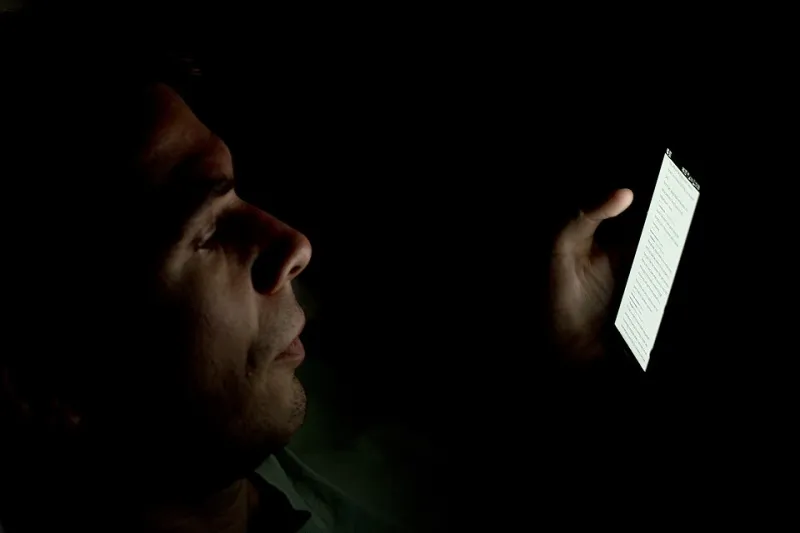
Photo: Japanexperterna.se from Japan, CC BY-SA 2.0, via Wikimedia Commons
Something weird happened the last time you edited a photo on your phone. You slid a single slider — maybe it was labeled "Cinematic" or "Moody" or something equally vague — and suddenly your lunch pic looked like it belonged in the opening sequence of a prestige HBO drama. The shadows fell just right. The colors felt intentional. The whole thing had weight.
You didn't do that. Not really. And yet, somehow, it felt like you did.
That tension — between the tool doing the work and the human taking credit for the vision — is sitting right at the center of one of the most interesting conversations happening in photography and visual culture right now.
The Algorithm Has Been Watching More Movies Than You
Here's the thing about AI-powered editing tools: they didn't just appear out of nowhere with a blank slate. They were trained. On millions of images. On award-winning photography, on film stills, on editorial spreads from magazines that most people will never pick up at a newsstand. Tools like Adobe's Firefly, Lightroom's AI masking, and the filter engines baked into apps like VSCO and Facetune have essentially digested decades of high-end visual craft and compressed it into a tap-and-swipe experience.
What that means, practically, is that when the AI "enhances" your photo, it's making compositional and tonal decisions that mirror the choices cinematographers and photographers have spent careers learning. Negative space gets preserved. Skin tones get lifted in ways that recall classic portrait lighting. Color palettes shift toward the kind of intentional contrast you'd associate with a DP who really loves their job.
The algorithm, in other words, has seen more movies than you have — and it's using that knowledge every time you hit "auto."
Mise-en-Scène for the Masses
Mise-en-scène is one of those film school terms that sounds intimidating until you realize it just means "everything you put in the frame and why." It's the discipline of thinking about light, composition, color, and depth as a unified language rather than a checklist of technical specs.
For most of cinema history, that discipline lived behind a velvet rope. You needed training, equipment, and access to even begin developing that kind of eye. What AI filters are doing — accidentally, almost as a side effect — is giving everyday people a felt sense of what those decisions look like when they work.
When someone in Des Moines opens Instagram and notices that their edited snapshot has that quality — that sense of intention — they're getting a data point. They're learning to recognize what purposeful composition feels like, even if they couldn't name it. Repetition builds pattern recognition. Pattern recognition builds taste.
That's not nothing. That's actually kind of remarkable.
But Does It Teach, or Just Perform?
Here's where it gets complicated. There's a real difference between understanding why something looks good and just knowing that it does. A filter can give you the output without the input — the aesthetic without the education.
Talk to working photographers and you'll hear versions of the same concern: their clients increasingly arrive with AI-edited reference images and a very strong sense of what they want, but almost no vocabulary for how to get there without the tool. The visual literacy is surface-level. It's recognition without comprehension.
That's not unique to photography. Auto-tune taught a generation to recognize pitch-perfect vocals without necessarily developing an ear for what makes a voice interesting. The tool can sharpen your expectations while simultaneously lowering the floor for what it takes to meet them.
The risk isn't that AI filters make photography worse. It's that they might make all photography look the same — a global Instagram feed where every image has been run through the same invisible taste machine, producing work that feels polished and eerily uniform, like a world where every city has the same coffee shop aesthetic.
The New Visual Vocabulary
Still, something genuinely new is emerging. Creators who started with AI tools as a crutch are increasingly using them as a launching point — a way to quickly prototype a visual direction before going deeper. Young photographers especially are treating AI-assisted editing not as the final word but as a rough draft, something to react against or build on.
There's also a growing counter-movement — photographers deliberately shooting and editing in ways that resist the AI aesthetic. Grain, imperfect color, unconventional framing, blown-out highlights. The kind of images that make the algorithm uncomfortable. In a world where the AI knows what "good" looks like, "interesting" increasingly means something the machine hasn't catalogued yet.
That push-and-pull is healthy. It's how visual culture has always evolved — a dominant aesthetic emerges, gets democratized, gets commodified, and then the most interesting creators start running in the opposite direction.
So Are We Learning to See, or Just to Swipe?
Probably both, honestly. The most optimistic read is that AI filters are functioning like a giant, distributed film school — exposing hundreds of millions of people to compositional principles they'd never encounter otherwise, building a shared visual vocabulary that makes the audience more receptive to ambitious work.
The more skeptical read is that we're training ourselves to respond to a very specific set of aesthetic cues that one particular machine has decided represent quality — and that over time, that feedback loop narrows rather than expands what we consider worth looking at.
What's clear is that the frame through which we see images is shifting. The question isn't whether AI is changing photography — it obviously is. The question is whether the people using these tools are becoming more visually fluent or just more visually dependent.
The answer probably depends on whether you stop at the filter, or whether it makes you curious enough to look further.