Forty Years of Staring: The Secret Life of the Lighthouse in Exam Room 3
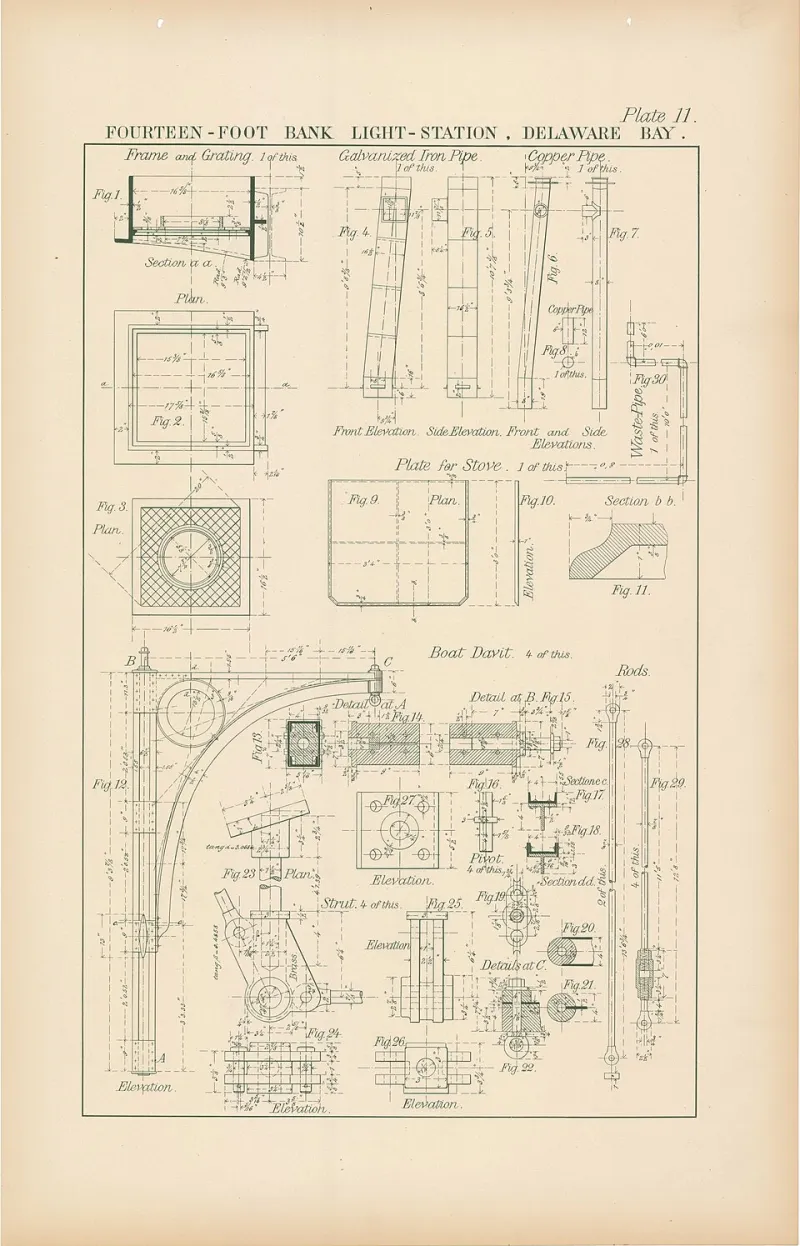
Photo: Unknown authorUnknown author or not provided, Public domain, via Wikimedia Commons
There's a lighthouse somewhere in America — actually, there are dozens — that has quietly become one of the most-viewed photographs in the country. It hangs in exam rooms and dental suites from Scranton to Sacramento, framed in brushed aluminum, its waves frozen mid-crash against rocks that no tourist has ever stood on. You have probably looked at it for twenty straight minutes while your mouth was full of cotton. You could not describe it if your life depended on it.
That's the paradox at the heart of what we might call the waiting room canon: a body of images so thoroughly seen and so completely forgotten that they've become visual white noise. And when you start pulling that thread, you find an entire shadow industry — printers, distributors, licensing offices, and a handful of bewildered photographers — sitting behind it.
The Art Nobody Chose
Walk into any medical office built between 1980 and 2010 and you'll spot them. The lighthouse. The rowboat at golden hour. The misty covered bridge in autumn. The sailboat that seems to be permanently circling a lake in a Marriott. These images weren't selected by anyone with taste in mind — they were selected by procurement. Interior design firms that outfit medical buildings work off catalogs of "calming" artwork, chosen for one reason: they can't offend anyone and can't distract anyone.
That second requirement is the strange one. The ideal waiting room image is engaging enough to prevent anxiety spirals but boring enough to vanish. It's a photograph engineered to be looked at without being seen. In an industry obsessed with capturing attention, this is art built to politely refuse it.
The Photographers Who Never Found Out
Here's where the story turns. In the late '80s and early '90s, stock photography worked on a handshake-and-invoice model. A photographer would license an image to a distributor for a flat fee — sometimes fifty bucks, sometimes a few hundred — and that was the end of it. No usage reports. No royalty statements. No way of knowing that the shot of a Maine lighthouse you took on a Tuesday would end up replicated on office walls in all fifty states.
Several of the photographers behind the genre's most ubiquitous prints have, over the years, discovered their own work by accident. A relative spots it in a cardiologist's office two states away. A patient photographs it and posts it online with the caption "does anyone know this image??" and someone recognizes the style. For some, it's a point of pride — a weird immortality. For others, it's a quiet sting: the image that paid one month's rent went on to be reproduced a million times over, and the checks stopped in 1994.
The distributors, for their part, rarely kept meticulous records either. Art is bought in bulk, licenses get bundled, and the chain of custody dissolves. Some of these images are, functionally, orphans — famous to everyone, owned by no one, credited to no one.
A Shared Visual Vocabulary Nobody Agreed To
What's genuinely fascinating about the waiting room gaze is what it did to American visual culture. These prints formed a kind of involuntary canon. Millions of people who never set foot in a gallery absorbed the same compositional grammar: the rule of thirds, the warm-versus-cool palette, the solitary structure against an indifferent landscape. It's the same grammar that shows up in landscape photography everywhere — and some of it, arguably, trickled down from these very prints.
There's a reason the lighthouse became the king of the genre. It's a symbol with almost no baggage. It suggests safety, guidance, resilience, solitude — pick your meaning. It works whether you're getting a root canal or waiting on biopsy results. No other subject in the stock art ecosystem had that range. Sunsets came close, but a sunset implies an ending, and nobody putting together a hospital hallway wants to imply anything about endings.
The Reassessment
Something has shifted recently. A generation raised on algorithmic feeds — where every image is optimized to hijack attention — has developed a strange nostalgia for the un-optimized. Waiting room art is having a moment. People are hunting down the original prints on resale sites. Photographers are deliberately making work in the genre, playing the lighthouse aesthetic straight or subverting it. There's something almost rebellious about an image that asks nothing of you.
It's worth sitting with that. We spend enormous energy talking about what images demand of us — the scroll, the click, the engagement. The framed print in Exam Room 3 makes no demands. It has hung there for forty years and will hang there for forty more, absorbing glances and releasing nothing. Maybe that's not wallpaper. Maybe that's the rarest thing in American visual culture: an image completely at peace with being overlooked.
Next time you're in a waiting room, actually look at the wall. Someone made that photograph. Somebody chose it. Somebody printed it, framed it, and hung it at exactly the height of a seated, anxious gaze. Every frame tells a story — even the ones telling it to nobody at all.