Eighty Slides and a Whirring Fan: How the Carousel Projector Became America's Unlikeliest Party Trick

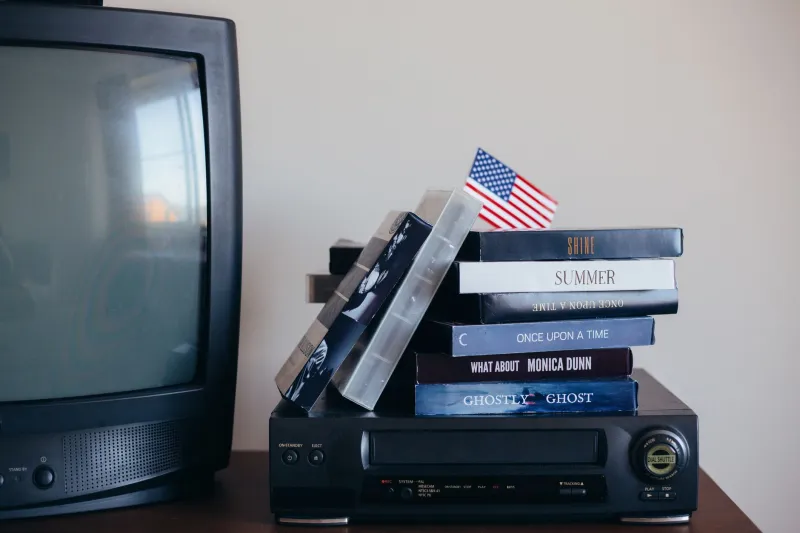
Photo by Photo by Austin on Unsplash on Unsplash
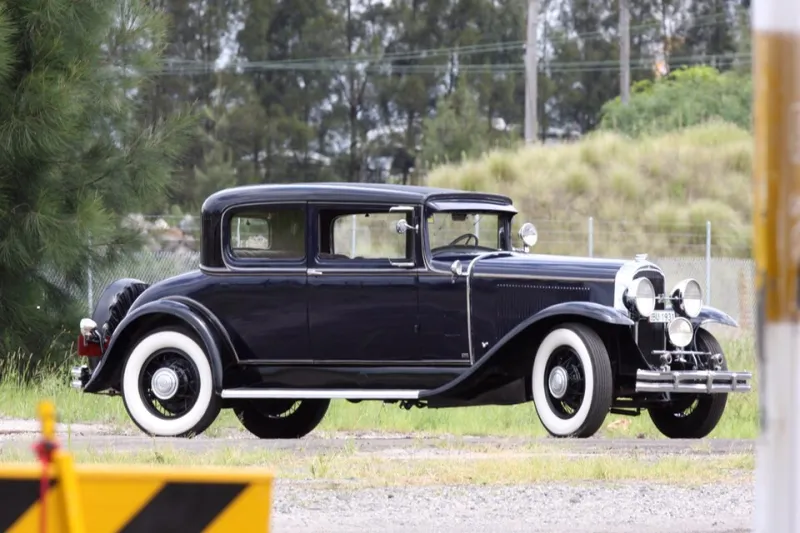
Somewhere in a basement in Dayton, Ohio, a machine that Kodak stopped making in 2004 is holding forty people hostage. The fan hums. The tray clunks from slot to slot. A slightly warped photo of somebody's grandmother in front of a Buick glows twelve feet wide on a bedsheet, and nobody — not one person in the room — has checked their phone in twenty minutes.
In 2024, that's a miracle. And it's happening more than you'd think.
The Machine Gun of Memory
There's a reason the old-timers called the carousel's slide-change sound "the clunk of memory." The projector advances with a mechanical thunk — a sound so distinctive that anyone over forty hears it in their sleep. Collectors joke that the turret-style tray, spinning through its slots with a rapid-fire rhythm, resembles nothing so much as a machine gun firing nostalgia rounds into a darkened room.
It's an absurd image. It's also accurate. Because what the carousel projector actually does is fire memories at a captive audience, one at a time, with no skip button and no swipe-back.
That's the whole appeal, argues Dana Whitfield, a projectionist and collector in Portland who restores carousels out of her garage and rents them out for weddings. "A phone at a party is a slot machine. Everyone pulls the lever for their own payout. A slide show is a church service. You're all looking at the same thing, at the same time, and you can't fast-forward grandma's vacation to Sedona. You sit in it. That's the gift."
From Garage Sale to Gallery Wall
The revival is happening in three overlapping circles.
First, the family gatherings. The estate-sale economy has flooded the market with carousels and shoeboxes of slides nobody's looked at since the Carter administration. Adult children clearing out their parents' homes discover thousands of Kodachromes in yellow boxes and, increasingly, decide to show them instead of scanning them. A slide show for a 60th birthday or a rehearsal dinner — projected the old way — has become a genuinely sought-after experience.
Second, the artists. Experimental filmmakers and installation artists have been quietly hoarding projectors for years, drawn to the grain, the dust motes drifting through the beam, the warm collapse of color that only three-decade-old film stock produces. Galleries in Los Angeles, Marfa, and the Hudson Valley have all mounted recent shows built around carousel loops — analog work that photographs beautifully in an age when everything else is pixel-perfect.
Third, and most surprising: the kids. Gen Z, raised on infinite feeds and algorithmic sameness, has discovered the carousel through TikTok, naturally. Videos tagged with slide projector hashtags rack up millions of views — the glowing rectangle in a dark room, the clunk, the laughter. For a generation that grew up with every image instantly retrievable, the idea that a photo exists in exactly one physical place, shown exactly once, in front of exactly the people in the room, reads less like a limitation and more like a superpower.
"It's the opposite of my camera roll," says Mia Torres, a 24-year-old in Austin who bought a Kodak Ektagraphic off Facebook Marketplace after seeing one at a friend's engagement party. "My camera roll is forty thousand pictures of nothing. A carousel tray holds eighty. You have to choose. And when it's done, it's done, and everyone claps, and you go to bed. It's the best app I've ever used and it's a hundred pounds of metal."
The Buyer's Guide: Getting Your Own Clunk
Convinced? Good news: this is one of the few vintage obsessions that's still affordable. Here's the field guide.
What to buy. The gold standard is the Kodak Ektagraphic III — the workhorse model built like a tank for schools and churches, with a sturdier mechanism than the consumer-grade Kodak Carousel line. The Ektagraphic II is nearly as good and often cheaper. Expect to pay $75 to $250 depending on condition, with remote controls and extra trays adding value. Avoid anything sold "as-is, untested" unless you're handy — a jammed mechanism is the most common failure.
Lenses matter more than the body. A sharp zoom lens (80–100mm is typical) transforms the experience. Kodak's Ektar and Sigma's vintage zooms are favorites among enthusiasts. Check the glass for fungus or haze by shining a phone flashlight through it.
Check the bulb situation. Most carousels use halogen projector lamps that run hot. Many units ship with burnt-out bulbs; replacements are still manufactured and cost $10–30. Handle new bulbs with gloves — skin oils kill them early.
The restoration basics. Most problems are fixable at kitchen-table level. Sticky mechanisms want a tiny amount of grease on the tray ring (hobby shops sell appropriate lubricant). Corroded battery contacts in remotes clean up with vinegar and a cotton swab. Cracked drive belts are the one genuinely annoying repair — though donor machines on eBay usually solve that for pennies.
Find the slides. Estate sales, thrift stores, and eBay are drowning in slide lots — often 500+ slides for under $50. Or, better: get your own family's slides out of that closet. Local camera shops and mail-in services can clean and mount loose slides for projection.
Buy a real screen eventually. A bedsheet works, and honestly, it's part of the aesthetic. But a used Da-Lite screen for $40 makes colors sing.
Eighty Slides, No Skipping
There's a rule of thumb among the revivalists: eighty slides is the magic number. Roughly twenty minutes at a relaxed pace — long enough to build a rhythm, short enough that nobody gets restless. Professional projectionists advise editing ruthlessly and sequencing like a DJ: open strong, save one gut-punch for the end, and always, always leave them wanting one more tray.
The carousel won't come back the way vinyl did — there's no new manufacturing, no boutique pressings. Every working machine is a survivor, and the supply shrinks a little every year. Which may be the point. In a culture where every image is infinite and instantly forgettable, the carousel offers the one thing a phone can't: scarcity, presence, and a room full of people watching the same light at the same time.
The fan hums. The tray clunks. Somebody's grandfather is seventeen years old, standing in front of a Buick, forever.
Don't skip this one.