Fluorescent Light, Real Cinema: The Americans Shooting Masterpieces Between 'Now Serving 47' and 'Now Serving 48'
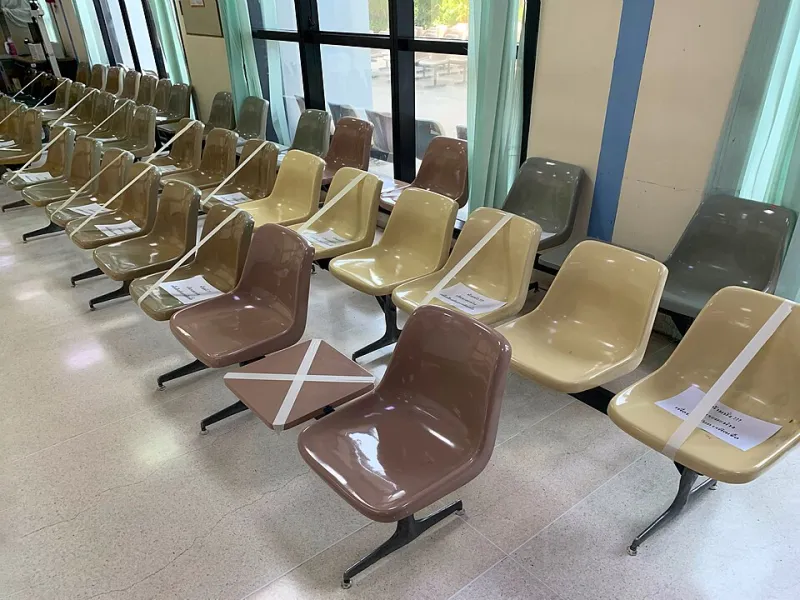
Photo: Chainwit., CC BY-SA 4.0, via Wikimedia Commons
There's a moment that happens in every DMV in America. The ticket dispenser chews out a fresh number, the electronic voice announces it to a room that barely looks up, and a hundred people settle deeper into vinyl chairs connected to nothing. Most of us experience this as lost time. A growing crew of American filmmakers and photographers experience it as a set.
They're not professionals, mostly. They're people with a phone in one pocket and a strange itch to document the exact feeling of being nowhere in particular. And the footage they're getting — the slant afternoon light through tinted lobby windows, the flickering departures board, the man asleep upright with his collar still crisp — is some of the most honest visual storytelling being made in this country right now.
The Aesthetic Has a Name, But the Places Don't
If you've spent any time online in the last few years, you've seen liminal spaces: empty mall corridors, hotel hallways at 2 a.m., pools with no water. The images feel haunted precisely because these rooms were designed for transition, not arrival. Nobody is supposed to stay in them.
But the trend, as it spreads, has flattened into wallpaper — moody backdrops for playlists. What's happening in actual American waiting rooms is messier and better. There are people in the frame. There's a bureaucracy humming just off-screen. There's the low-grade comedy of a numbered ticket system governing human lives.
The internet gave us the aesthetic. The DMV gave it a cast of characters.
Three Creators, Three Lobbies
Marcus Deleon, a 31-year-old warehouse scheduler in Phoenix, has spent two years shooting a slow-motion portrait series in the lobby of a state motor vehicle office — with permission, he's quick to note, and always from the public seating area. "The light in there is unforgivable," he laughs. "Overhead fluorescents, no windows on one whole wall. And that's the point. Everybody looks like the truest version of themselves. Nobody dressed up to renew a registration."
His best image, he says, is of an elderly woman asleep with her number — B64 — still clutched in her fist. "That's cinema. You don't need a script. You need a chair and a wait."
In Chicago, a film student who goes by J. Okonkwo online has been cutting a short documentary entirely from footage shot at O'Hare's late-night gates. Her subject isn't travel — it's the strange intimacy of strangers stacked in rows, charging cables strung like ivy, a gate agent's voice softening when she calls a final boarding group. "Airports at midnight are the last shared living room in America," she says. "Everyone's guard is down. Everyone's a little raw. You can point a camera — respectfully — and catch people at their most human."
And in a hospital lobby outside Cleveland, a retired nurse named Pat Wozniak has been photographing the front desk flower arrangements for three years. Not the patients, never the patients — just the carnations, the vending machine, the changing light on the linoleum. "I spent forty years in rooms like this," she says. "I know what these walls absorb. Somebody should write it down."
Why the Boring Rooms Win
There's a practical reason these spaces produce good work: they force the conditions most creators spend money to fake. Fluorescent light is harsh and unflattering — which means it's honest. The color palette is institutional beige and government blue, which makes any human element — a red jacket, a birthday balloon — land like a plot twist. And the pacing of a waiting room is dictated by a machine that calls numbers. You cannot rush it. You can only observe.
That constraint is a gift. Ask any editor: footage shot when you had nowhere else to be has a patience that footage shot on a schedule never does.
Framing the Mundane: What Actually Works
For those tempted to try it — ethically and legally, mind you — the creators share a few hard-won rules:
Shoot the edges of the room, not the people. The best liminal footage is about the space itself: the chair rows, the carpet pattern, the light fixture with one dead panel. People enter the frame as accents, not subjects. If a face matters, ask. It takes ten seconds and changes everything.
Embrace the institutional palette. Don't color-correct away the beige. The greenish cast of a hospital lobby or the flat blue of a DMV sign is the visual language of American waiting. Grade toward it, not against it.
Let the machine do the talking. The ticket voice, the gate announcements, the elevator chime — these are your score. Record room audio even if you're only shooting stills. Later, it'll transport you straight back.
Wait for the cut. The moment someone's number is called and they gather their coat — that transition is the whole story. Sit through enough of them and you'll catch one that says more about American life than a documentary crew could stage.
Know where you stand. Public lobbies are generally fair game for personal photography, but hospitals, schools, and federal buildings have their own rules. When in doubt, ask the person behind the desk. They've seen everything; they'll tell you straight.
The Longest Take in America
There's something quietly patriotic about all of this, if you squint. The waiting room is one of the few remaining spaces where Americans of every description are placed in the same room, on the same chairs, subject to the same number. It's involuntary community, documented in fluorescent light.
The creators shooting it aren't making a statement, exactly. They're just paying attention in the places we've all agreed to stop looking. And when the voice cracks through the speakers — "Now serving 48" — they've already got the shot.
The rest of us are still checking the ticket in our hand.