Outside the Lines: The Artists Who Blew Up the Rectangle and Never Looked Back
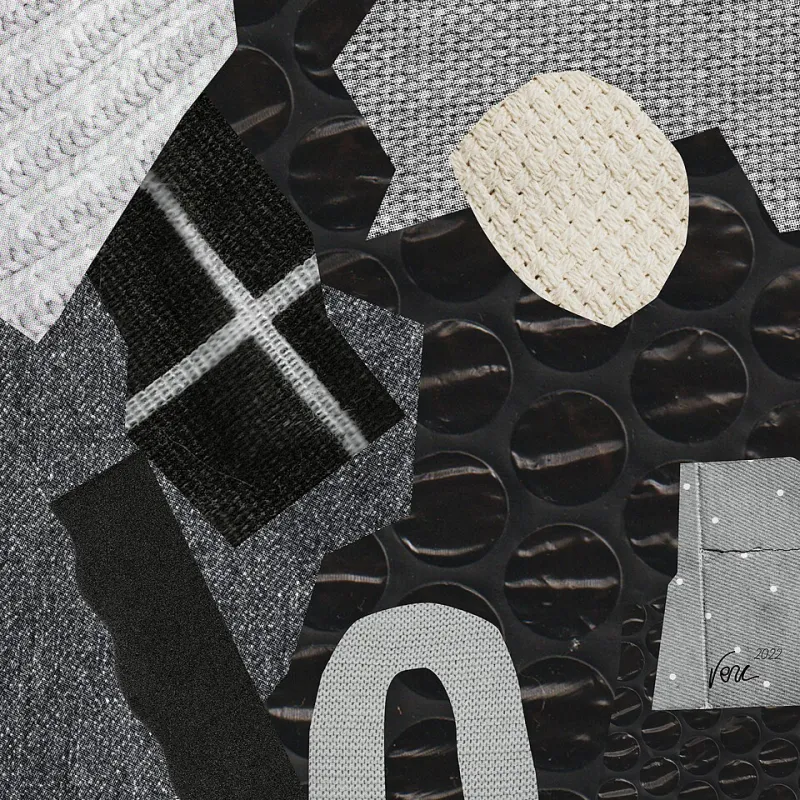
Photo: Artewikidoc, CC BY-SA 4.0, via Wikimedia Commons
The rectangle has had a good run. Paintings, photographs, movie screens, phone displays — for centuries, the four-sided frame has been the default container for human visual experience. It's so fundamental that most people don't even register it as a choice. It just is what a picture looks like.
Some artists are done with that assumption. And watching them work is genuinely disorienting in the best possible way.
The Grid Was Never Neutral
Before getting into the rebellion, it's worth understanding what exactly is being rebelled against. The grid — that invisible organizing system that structures everything from magazine layouts to Instagram feeds to gallery walls — isn't just an aesthetic preference. It's a worldview. It says: images are discrete units. They have edges. They don't bleed into each other. They sit still and wait to be looked at one at a time.
For most of visual history, that made practical sense. Printing, framing, and displaying images required clean boundaries. The medium enforced the form.
But digital creation has no such requirement. There is no physical reason a digital image needs to be rectangular, or that a layout needs to follow a grid, or that one photograph can't dissolve into another. The constraints were inherited, not inevitable — and a growing number of creators are noticing that.
What Rejecting the Frame Actually Looks Like
Marcella Voss, a Chicago-based digital artist and photographer who has built a following for her collage-forward work, describes her process as "deliberately breaking the contract" between image and viewer. Her pieces layer photographs at odd angles, let shapes bleed off the edge of the composition, and use irregular cutouts that force the eye to travel in unexpected directions.
"The rectangle tells you where to look," she says. "It says: everything important is inside this box. I'm interested in what happens when you take that away. People get a little uncomfortable. They don't know where to start. And that discomfort is where the interesting stuff lives."
That discomfort is kind of the point. Conventional framing is essentially a promise to the viewer: we've done the work of deciding what matters. Here it is, contained, organized, easy. Rejecting the frame breaks that promise — and replaces it with a different kind of invitation.
Platform Pressure and the Push Back
Social media platforms have been one of the biggest enforcers of rectangular conformity. Instagram's square era. TikTok's 9:16 vertical lock. Pinterest's card-based grid. Every major visual platform has trained its users to expect images in predictable shapes and sizes, and has algorithmically rewarded content that fits those containers neatly.
The artists pushing back against the grid are, in many cases, explicitly pushing back against that platform logic. Brooklyn-based photographer and designer Theo Carmichael has been experimenting with what he calls "anti-scroll" compositions — images that are intentionally difficult to consume quickly.
"Everything is optimized for the half-second glance," he says. "I want to make things that don't work in half a second. Images that require you to actually stop." His recent series uses overlapping photographic prints, scanned and recombined digitally, with text running at angles across the frame. On a phone screen, you have to zoom, pan, and sit with it. It's deliberately inconvenient.
Interestingly, that inconvenience has become part of the work's identity. Audiences who find his pieces report spending significantly longer with them than they would with a standard photograph — which, in the attention economy, is almost a radical act.
Non-Linear Visual Storytelling
Beyond individual images, some creators are experimenting with sequential work that resists linear reading entirely. Traditional photo essays have a beginning, middle, and end — a narrative logic that guides the viewer through the work in a specific order. The new wave of visual storytellers is building experiences that work more like hypertext, or like walking through an installation, where the viewer's path through the work shapes what story they encounter.
Los Angeles-based photographer and creative director Simone Adeyemi has been building what she describes as "visual ecosystems" — clusters of images that are related but not sequential, presented in formats that don't privilege any single entry point. "There's no hero image," she explains. "There's no caption that explains what you're supposed to feel. I want people to build their own meaning from the pieces."
This approach places real demands on audiences — demands that not everyone is willing to meet. Some viewers find it frustrating. They want the story handed to them. But for others, the participatory quality of the work creates a much stronger sense of engagement and ownership over what they've experienced.
The Technical Side of Breaking the Box
It's worth noting that this movement isn't purely conceptual — it's also being enabled by genuinely new tools. Creative software has made it easier than ever to work with irregular shapes, layered transparencies, and compositions that exist outside standard aspect ratios. Web design frameworks have gotten flexible enough to support layouts that would have been technically nightmarish a decade ago.
Augmented reality is also opening up a whole new dimension of frame-breaking. Artists are beginning to build work that exists in physical space, overlaid on the real world through a phone screen — compositions that have no edges because they extend into the viewer's environment.
What This Demands From Audiences
The through-line across all of this is engagement. Every one of these creators, in their own way, is asking audiences to show up differently — to be less passive, more willing to sit with confusion, more open to the idea that meaning might be something you construct rather than something that gets handed to you.
That's a harder sell than a beautiful, well-framed photograph. But for the creators committed to it, that difficulty is the whole point. They're not interested in images that go down easy. They're interested in images that stay with you — that rearrange something in the way you see.
The rectangle had a great run. But it was never the only option. And the artists working outside its edges are building something that the frame, by definition, couldn't contain.