Portrait Mode and Pivot: How the Phone in Your Pocket Is Rewriting the Grammar of Photography

Photo: Tore Sætre, CC BY-SA 4.0, via Wikimedia Commons
Let's be real for a second. If you're a photographer who came up shooting on a DSLR, cradling a horizontal frame like gospel, there's a decent chance you've felt a little twitch of irritation watching someone tilt their phone sideways to film a landscape — and then tilt it back to vertical because that's just how it goes on TikTok.
That irritation is worth examining. Because it might be less about aesthetics and more about territory.
The visual language of photography has been horizontal for most of its history — landscape orientation, widescreen cinema, the 3:2 ratio of 35mm film. These proportions weren't arbitrary; they mirrored the natural sweep of human vision, the way our eyes sit side by side and scan a wide field. Horizontal was correct. It was natural.
And then a generation grew up holding a phone vertically, all day, every day, and decided that was natural too.
The Vertical Revolution Nobody Asked For (And Everyone Got Anyway)
TikTok didn't invent vertical video — Snapchat Stories got there first — but TikTok normalized it at a scale that made it impossible to ignore. By the time Reels and YouTube Shorts followed suit, the 9:16 aspect ratio had become the dominant frame for how hundreds of millions of people consume visual content every single day.
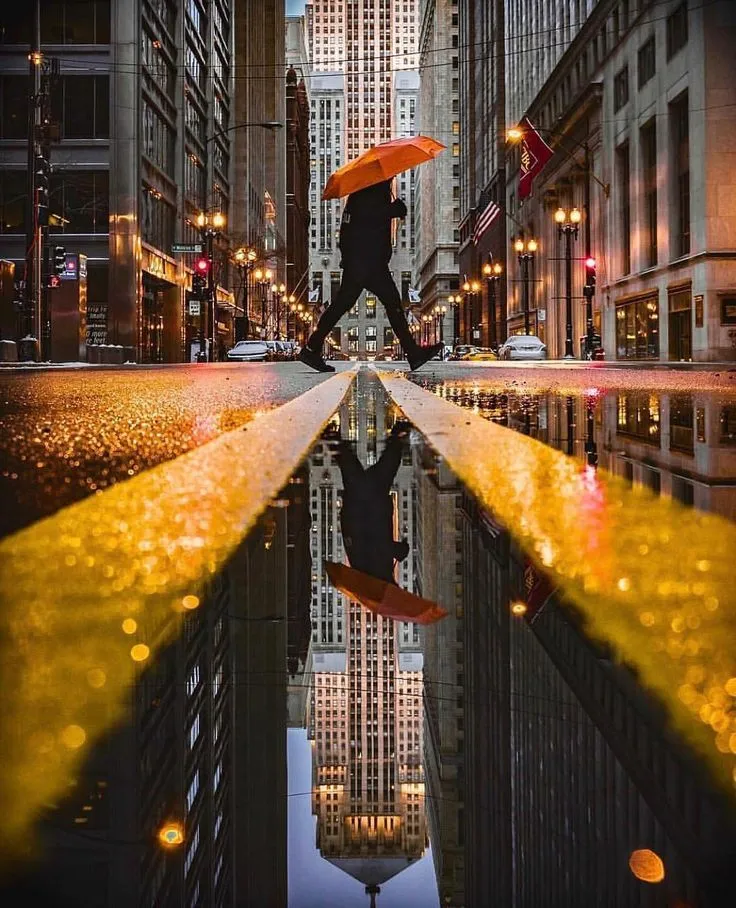
The downstream effects on photography have been real and measurable. Portrait orientation — once reserved for, well, portraits — is now showing up in street photography, architectural work, landscape shots, editorial spreads. Photographers who ignored vertical composition as a serious creative choice are quietly revisiting that position.
And the visual vocabulary that comes with vertical isn't just a rotated rectangle. It brings its own sensibility: tight framing, intimate proximity to subjects, compressed backgrounds, a focus on single central figures rather than expansive scenes. It's personal in a way that horizontal often isn't. It says I'm right here with you rather than look at all of this.
Gen Z Isn't Breaking the Rules — They're Just Working With Different Ones
Here's where the conversation gets interesting, and where a lot of older photographers get it wrong: Gen Z creators aren't ignorant of compositional principles. They're applying them within a completely different set of constraints and intentions.
The rule of thirds still works vertically. Leading lines still work vertically. Negative space, depth layering, light direction — all of it translates. What changes is the context of consumption. A vertical image viewed full-screen on a phone is an immersive experience. There's no white space around it, no browser chrome, no competing elements. The frame is the world for that moment.
That context demands different choices. Tighter. More immediate. Designed for a thumb-scroll environment where you have maybe one second to earn continued attention before someone moves on.
Is that a creative constraint? Absolutely. But so is a 4x5 large format camera, and nobody's arguing that Ansel Adams was creatively limited.
The Aesthetic That Came With the Algorithm
What's harder to defend — and worth being honest about — is the way algorithmic pressure has shaped not just format but content. TikTok's recommendation engine rewards certain visual patterns: high contrast, fast movement in the first two seconds, text overlays, trending audio. The result is a kind of aesthetic convergence that can feel less like creative expression and more like template-filling.
Scroll through any major creator's feed and you'll start to see the patterns. The same tilted-camera walk-and-talk opener. The same dramatic zoom to a reveal. The same color grades that pop on mobile screens. It's visually energetic, often genuinely clever, but it can also feel weirdly homogeneous — like everyone is speaking the same dialect.
This is where the tension between evolution and erosion gets real. If the platform shapes the aesthetic more than the creator does, that's worth questioning. The best photographers — regardless of era or format — make choices. They impose their vision on the frame rather than letting the frame impose itself on them.
The most interesting Gen Z creators are the ones doing exactly that. They're fluent in the vertical format but not enslaved to it. They understand why the algorithm rewards certain choices and consciously decide when to play along and when to break the pattern.
What Established Photographers Can Actually Learn Here
This is not a piece about how TikTok is destroying photography. That framing is lazy and wrong. This is a piece about what happens when a massive generational cohort develops a new visual literacy — and what the rest of the photography world can take from that.
A few things worth genuinely considering:
Proximity and intimacy are undervalued. Mobile-first photography has pushed creators toward tighter, more personal framing. There's an emotional directness to that approach that a lot of traditional photography could stand to learn from. Not every image needs to breathe with negative space. Sometimes the power is in the closeness.
Imperfection has become a signal of authenticity. The hyper-polished, technically flawless image carries a different cultural weight now than it did ten years ago. Gen Z creators have made grain, motion blur, and handheld wobble feel intentional and honest. That's not sloppiness — it's a deliberate aesthetic choice about what real looks like.
Context of consumption is part of the composition. Where and how an image will be seen should shape how it's made. Photographers have always known this in theory — a gallery print and a magazine spread require different approaches. Mobile is just another venue with its own demands, and ignoring those demands isn't artistic integrity, it's stubbornness.
The Frame Was Never Fixed
Every generation of photographers has wrestled with some new technology or format that seemed to threaten the established order. Digital killed film. Instagram democratized editing. And now TikTok is making vertical the default.
Each time, the medium adapted. The principles — light, composition, timing, intention — survived because they're not really about any particular format. They're about how human beings see and feel and make meaning from images.
Gen Z didn't break photography. They picked it up, turned it sideways, and started telling stories with it. Some of those stories are extraordinary. Some are derivative. That's true of every generation of image-makers that came before them.
The frame is always changing. The eye — curious, hungry, searching for something real — stays the same.